
Unlocking Access to Premium Inputs
Since its establishment in 1990, Syngenta Uganda—part of Syngenta East Africa—has been a vital player in the country’s agricultural landscape. Specializing in vegetable seeds and crop protection products, the company has continually adapted to market demands, aiming to empower farmers with high-quality inputs. However, despite their longstanding presence, many Ugandan farmers faced significant hurdles: limited knowledge about the benefits of hybrid seeds and a lack of expertise in recommended agronomic practices. Recognizing these gaps, the Horticulture Market Acceleration Project (HortiMAP) identified the need to bridge the knowledge and access divide.
Overcoming Challenges Through Innovative Solutions
Ugandan horticulture farmers possess immense potential to increase their productivity. However, information deficits, restricted access to quality inputs, and inadequate extension services have hampered their growth. Seedling establishment problems, poor crop management, and low yields have been common frustrations, especially during critical planting periods. Mr. Pascal Kahesi, Syngenta’s Country Support Manager, emphasizes that these challenges limit farmers’ capacity to realize their full potential.
The Birth of a Young Plant Raisers (YPRs) model
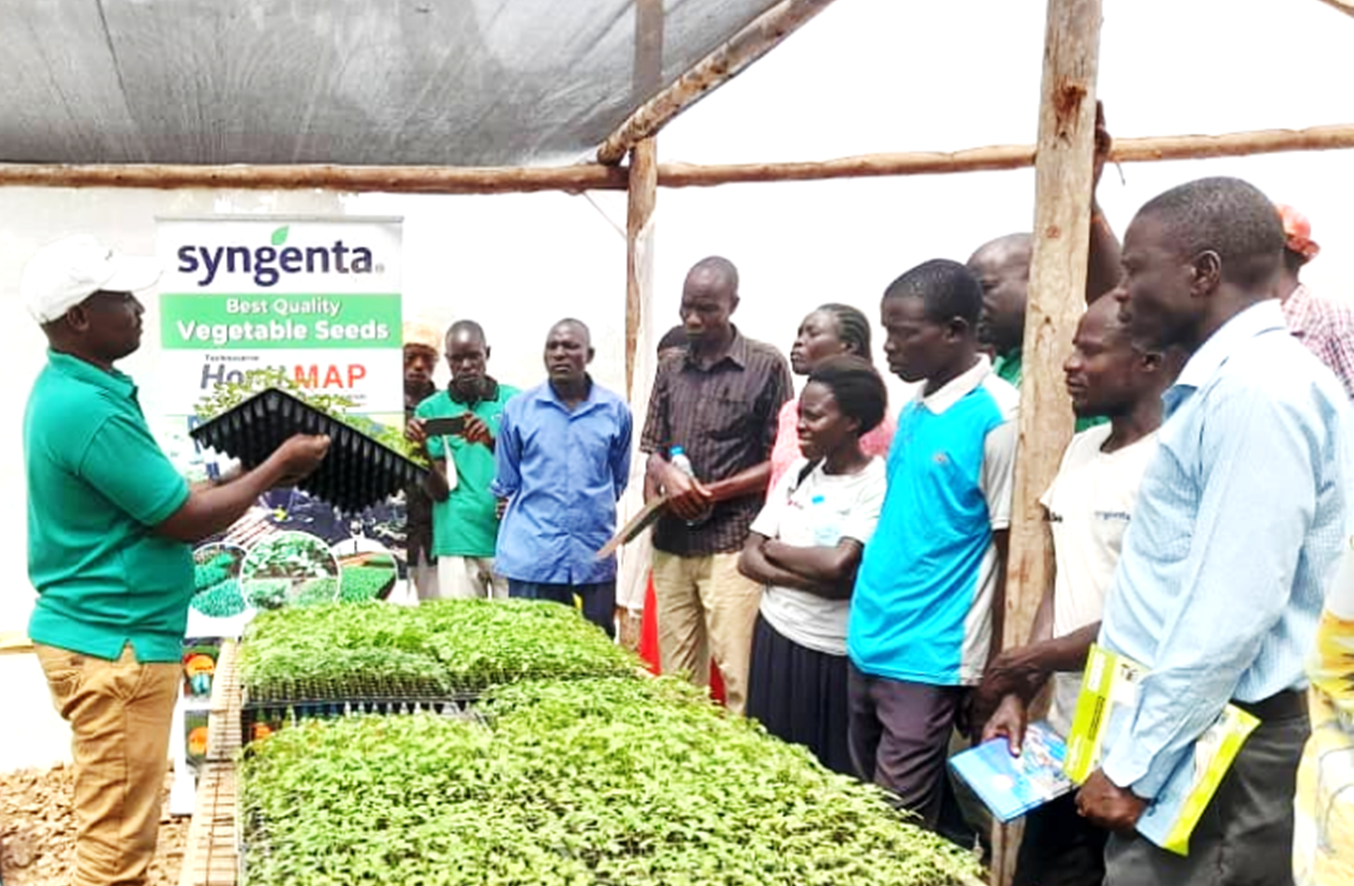
To address these systemic issues, Syngenta collaborated with TechnoServe and HortiMAP to develop a pioneering model called Young Plant Raisers (YPRs). This initiative involves establishing screen houses across districts, owned and operated by entrepreneurial farmers, primarily women and youth, who serve as hubs of excellence for horticulture seedlings. These hubs provided high-quality, disease-free seedlings alongside agronomy training and market linkages, fostering a sustainable and inclusive approach to horticultural development.
Through co-creation workshops, the team identified optimal locations for YPR centres, ensuring accessibility for local farmers. Hosts received comprehensive training on seedling production and entrepreneurship, and were connected to Syngenta’s distributor network to guarantee a consistent supply of seeds. Each YPR was assigned a dedicated Syngenta Agronomist who continues to mentor and enhance their skills, creating a ripple effect of knowledge transfer in the community.
The partnership successfully established six YPR centers, directly linking 360 farmers to improved hybrid varieties. Eighteen lead farmers were selected to demonstrate best practices through dedicated demonstration gardens, enabling others to observe and learn. The results have been striking: farmers’ yields soared—from 300 kg/acre of tomatoes to 7,000 kg/acre, peppers from 15,000 kg/acre to even higher, and cabbage from 40,000 kg/acre—marking a significant boost in productivity. The initiative also expanded Syngenta’s distributor network from five companies to seven, creating 22 new jobs and enhancing the supply chain.
Mr. Oluka Emmanuel, an agronomist with Syngenta, highlights, “HortiMAP has played a crucial role in dispelling misconceptions about hybrid seeds, empowering farmers to embrace better inputs confidently”.
Scaling Success and Expanding Reach
Encouraged by these successes, farmers now prefer buying seedlings over seeds, recognizing their immediate advantages. Raising vegetable seedlings remains a challenge, underscoring the need for ongoing training and capacity-building for entrepreneurial farmers to develop seedling production into a profitable business. The company plans to extend the YPR model into new regions beyond HortiMAP’s initial scope, aiming to raise awareness and broaden the impact of climate-smart, high-yield inputs.